Start with the questions your clients are already asking

Before opening any keyword tool, make a list of the concerns, questions, and phrases you regularly hear from clients.
If you’re a coach, consultant, or another service provider, think about what people ask during inquiry calls, send to your inbox, or struggle to understand before realizing your service could help.
These are already promising content ideas because they come from real people. Keyword research can help you discover which versions of those questions people search for and uncover related topics you may not have considered.
Use Google Keyword Planner to explore the topic
Google Keyword Planner is a free research tool inside Google Ads. You don’t need to be actively running ads, although Google may require you to complete your account setup, including entering billing information.
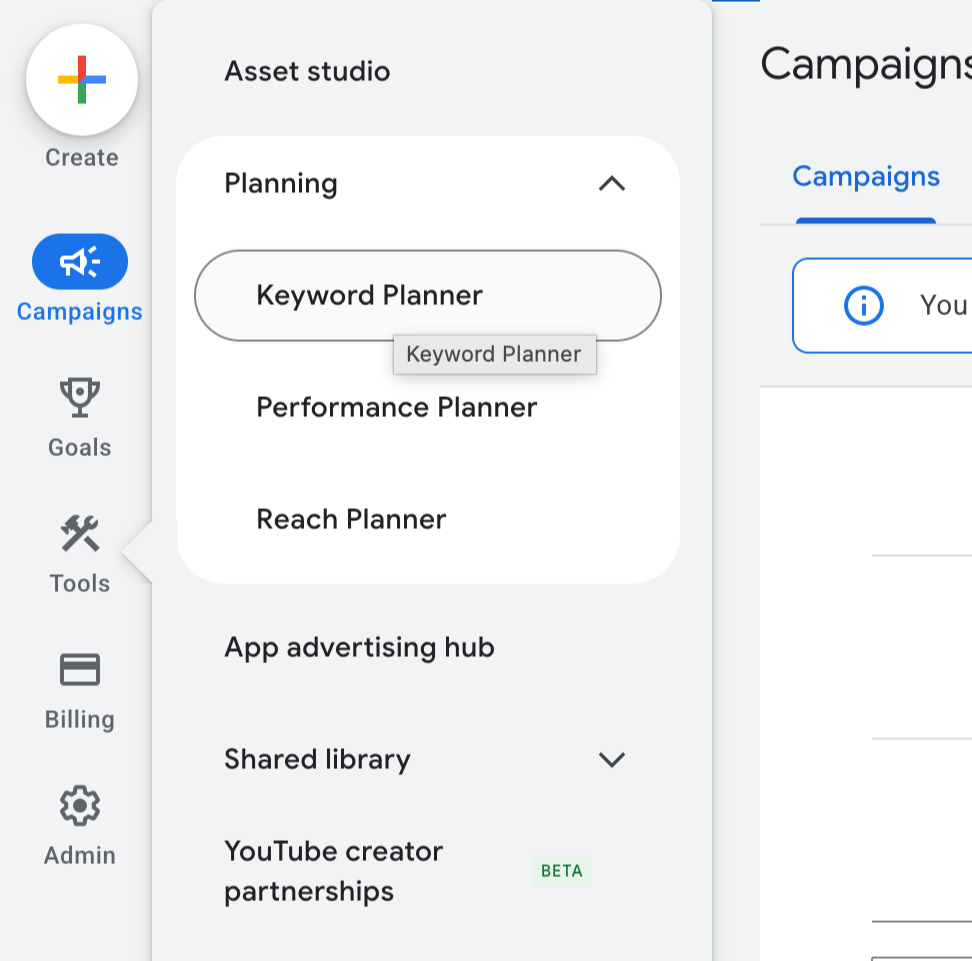
Once inside, find Keyword Planner under Tools and select Discover new keywords.
Enter a few broad phrases related to your services or the questions your clients ask, such as:
Anxiety counselling
Therapy for people pleasing
Caregiver burnout
Couples therapy after infidelity
Make sure you set the geographic location to the area you actually serve. Search activity across Canada will look very different from search activity province-wide, in Vancouver, or in a smaller local community.
Keyword Planner will return your original phrases along with related searches. These suggestions can show you the specific questions, symptoms, and situations people want help navigating.
A broad phrase like “caregiver burnout” may belong on a service page. A more specific search like “How do I set boundaries with an aging parent?” could become a focused blog post that supports and links back to that service.
Pay attention to relevance over search volume
The Average monthly searches column estimates how often a keyword and its close variations are searched in your chosen location. These numbers are rounded, so treat them as a way to compare topics rather than a prediction of how many people will visit your website.
Higher search volume does not automatically make something a better topic.
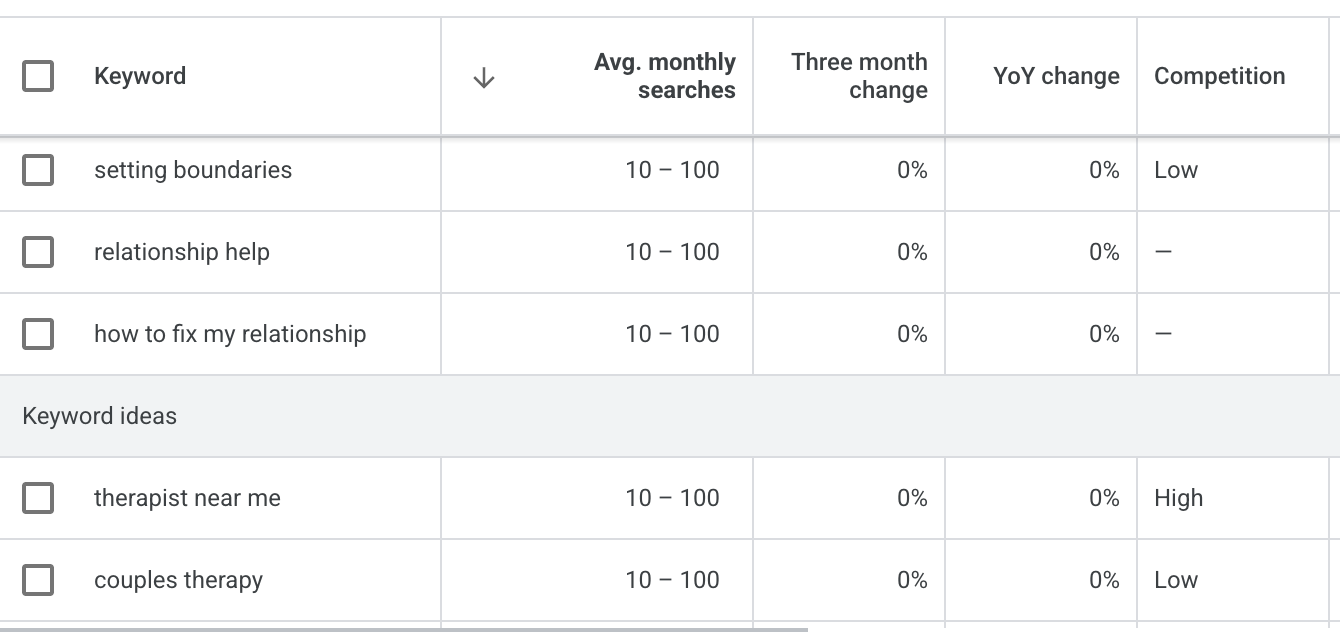
A broad phrase may attract thousands of searches without bringing you any suitable clients. A specific phrase searched only a few dozen times might be used by someone who needs exactly what you offer.
This is especially important for local and specialized services. Several slightly different searches may represent the same larger need, even when each phrase shows relatively little data on its own.
Instead of simply choosing the phrase with the highest volume or lowest competition, ask:
Does this relate to the work I want more of?
Can I tell what the person is hoping to learn or find?
Do I have something useful and credible to contribute?
Could the article naturally lead someone to one of my services?
The best topic usually isn’t the one with the biggest number. It’s the one with enough interest, a clear intention, and a meaningful connection to your work.
Group different versions of the same question
Keyword tools will often show several phrases that mean essentially the same thing:
Signs of burnout
Symptoms of burnout
How to know if you’re burned out
These probably don’t need to become three separate blog posts. They could be covered thoroughly in one strong article.
Look for searches that share the same underlying question. Choose the clearest wording for the main topic and use the other variations naturally as you discuss it. This helps you create a more complete resource and avoids publishing multiple pages that compete with each other.
Search the phrase yourself before you write
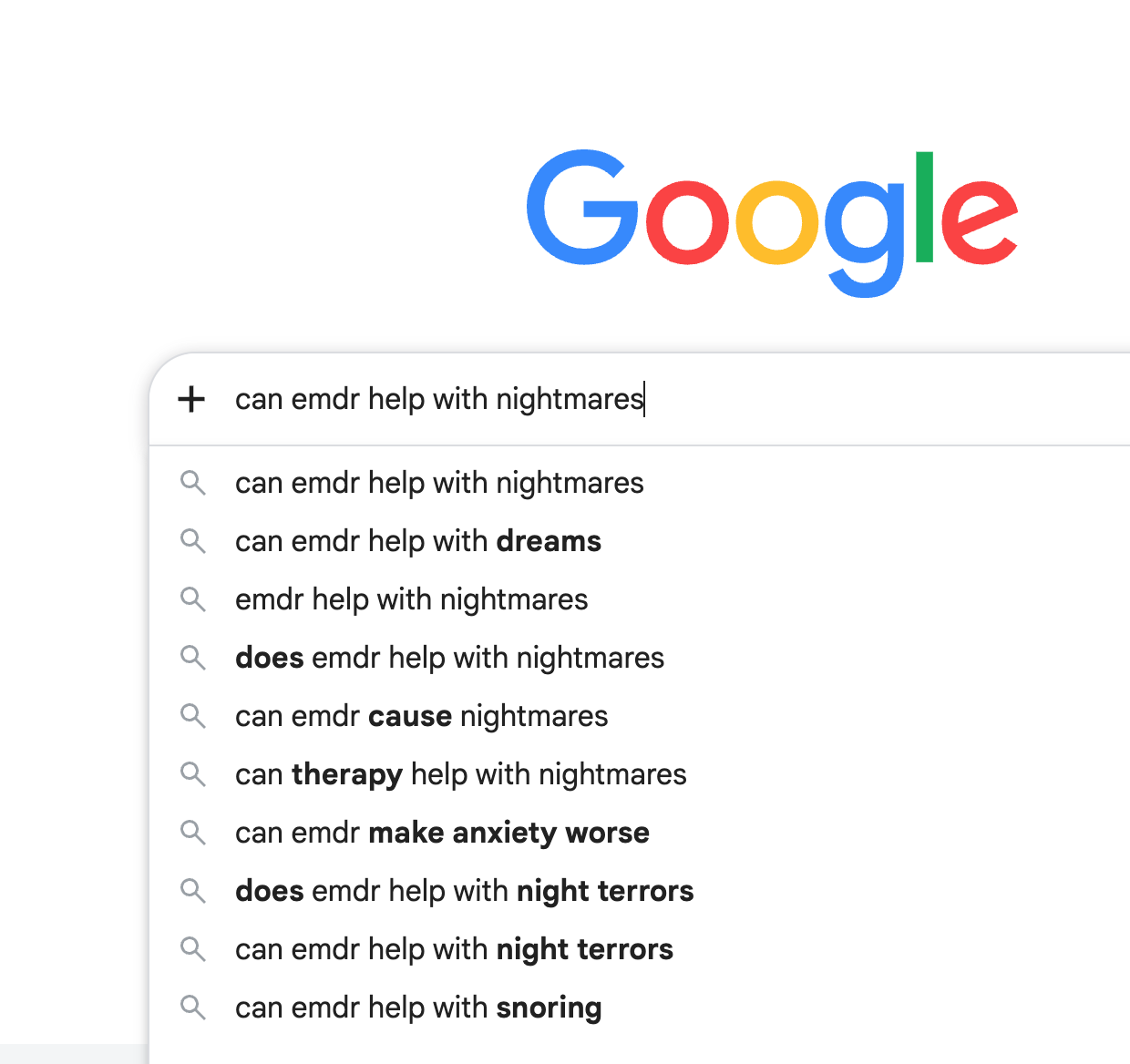
Keyword data can tell you that people search for something, but it can’t tell you the entire story. Before choosing your topic, search the phrase on Google and look at what currently appears.
Are the results educational articles, local service pages, therapist directories, academic studies, videos, or resources from major health organizations?
The type of results can help you understand what Google believes the person wants.
Someone searching “EMDR” could be looking for a definition, professional training, research, or a therapist. Someone searching “Can EMDR help with nightmares?” has a much clearer question.
You don’t need to copy the pages already ranking. You do need to make sure your planned article matches the intention behind the search. If the results answer a completely different question, choose a more specific phrase or adjust your angle.
You should also consider what you can add. You may have a clearer explanation, a more specific perspective, relevant professional experience, or insight into an audience that isn’t well represented in the existing results.
Look for opportunities in Google Search Console
If your website has been live for a while, Google Search Console can provide another valuable source of blog ideas.
While Keyword Planner estimates overall search activity, Search Console shows the actual searches your website has already appeared for.
Open the Performance report and review the queries generating impressions. Look for relevant searches that:
Receive impressions but very few clicks
Appear near the bottom of page one or on page two
Relate to a service you want to grow
Reveal a question your existing page doesn’t fully answer
For example, you may discover that an anxiety page is appearing for searches about overthinking at night. That could be an opportunity to add more information to the existing page or write a focused article that answers the question and links back to your anxiety service.
Not every query needs its own post. If it’s simply another way of describing something you already cover, improving the existing page may be the better choice. Create a new article when the search represents a distinct question that deserves a fuller answer.
Turn the keyword into a useful article
Once you’ve chosen a topic, the goal isn’t to repeat the keyword as many times as possible. Use it to clarify the subject, then write for the person behind the search.
A helpful article might include:
A clear title that names the question or concern
An introduction that helps the reader recognize their experience
A plain-language explanation of what may be happening
Relevant examples, considerations, or next steps
A natural link to a related service or resource
Include the main phrase in the page title, main heading, and wherever else it fits naturally. You don’t need to force every variation into the copy. When you cover the subject thoroughly, related language tends to appear on its own.
Keyword data is most useful when you have several worthwhile ideas and need help deciding where to begin. Start with the questions your clients ask, use the available data to understand how they search, and then create the clearest, most useful answer you can.

Give your content somewhere useful to lead
A good blog post can bring the right people to your website, but the rest of the site still needs to help them understand what you offer and take the next step. If your website needs clearer service pages, stronger SEO foundations, or a more intentional structure, explore our website design services.